Fees
A school fee reminder schedule that parents do not resent
Late fees are rarely about refusal. More often the reminder came once, at the wrong time, to the wrong parent. A calm, predictable schedule works better than one stern letter.
The schedule
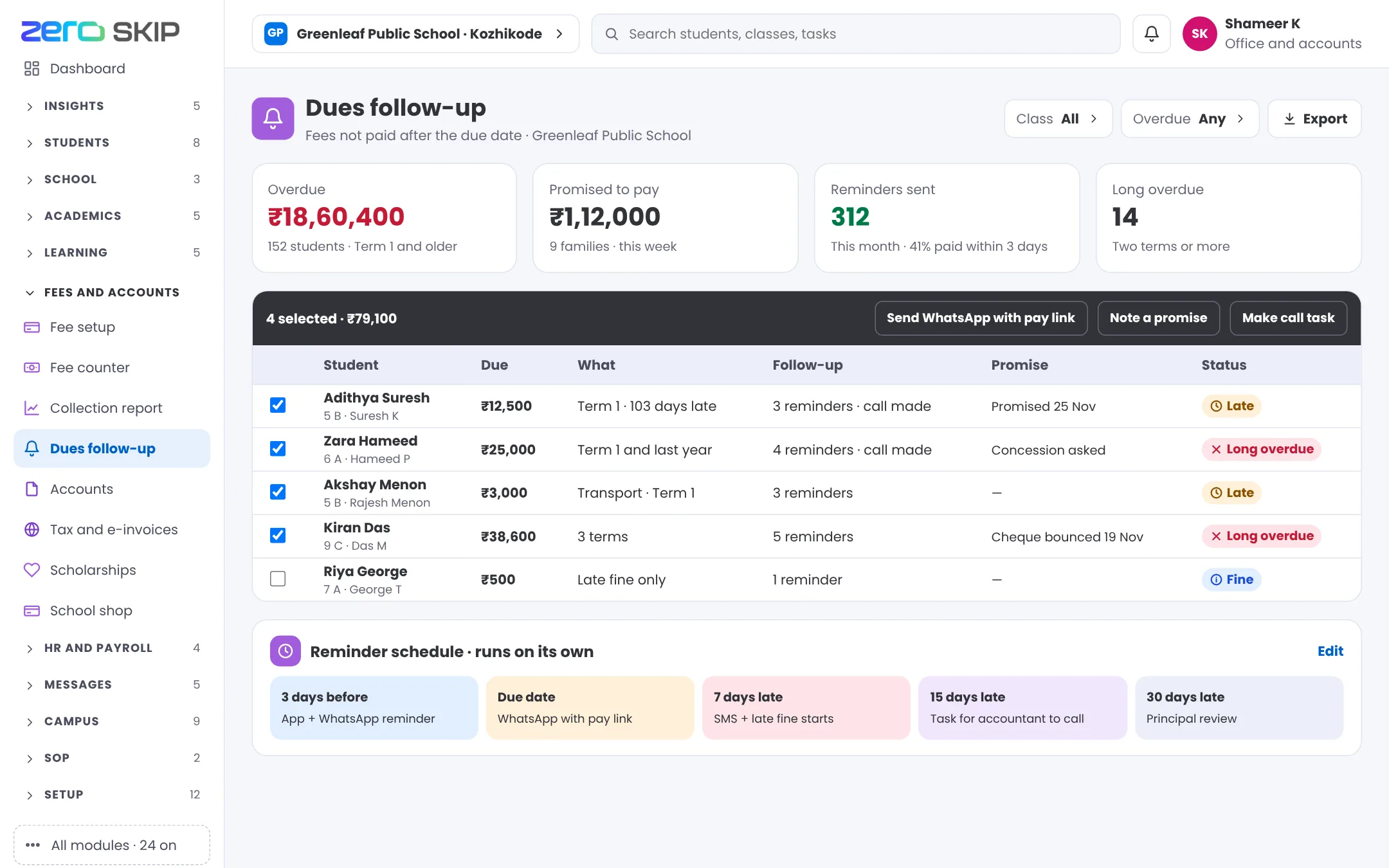
| When | What to send | How | Who |
|---|---|---|---|
| 7 days before the due date | A plain notice: amount, due date and how to pay. | App | Automatic |
| On the due date | A short reminder with a way to pay. | App and WhatsApp | Automatic |
| 3 days after | A polite follow-up that asks if there is a problem. | WhatsApp or SMS | Office |
| 10 days after | A phone call. | Phone | Class teacher or office |
| 20 days after | A meeting to agree a plan. | In person | Accountant or principal |
These gaps are a starting point. Set your own, then keep them the same every term so that families know what to expect.
Five rules that keep it respectful
- Send reminders to the person who pays, never through the child.
- Never mention dues in a class group.
- Say the amount, the due date and how to pay. Nothing else.
- Stop reminders the moment the payment arrives.
- Offer a way to ask for more time.
When a parent asks for more time
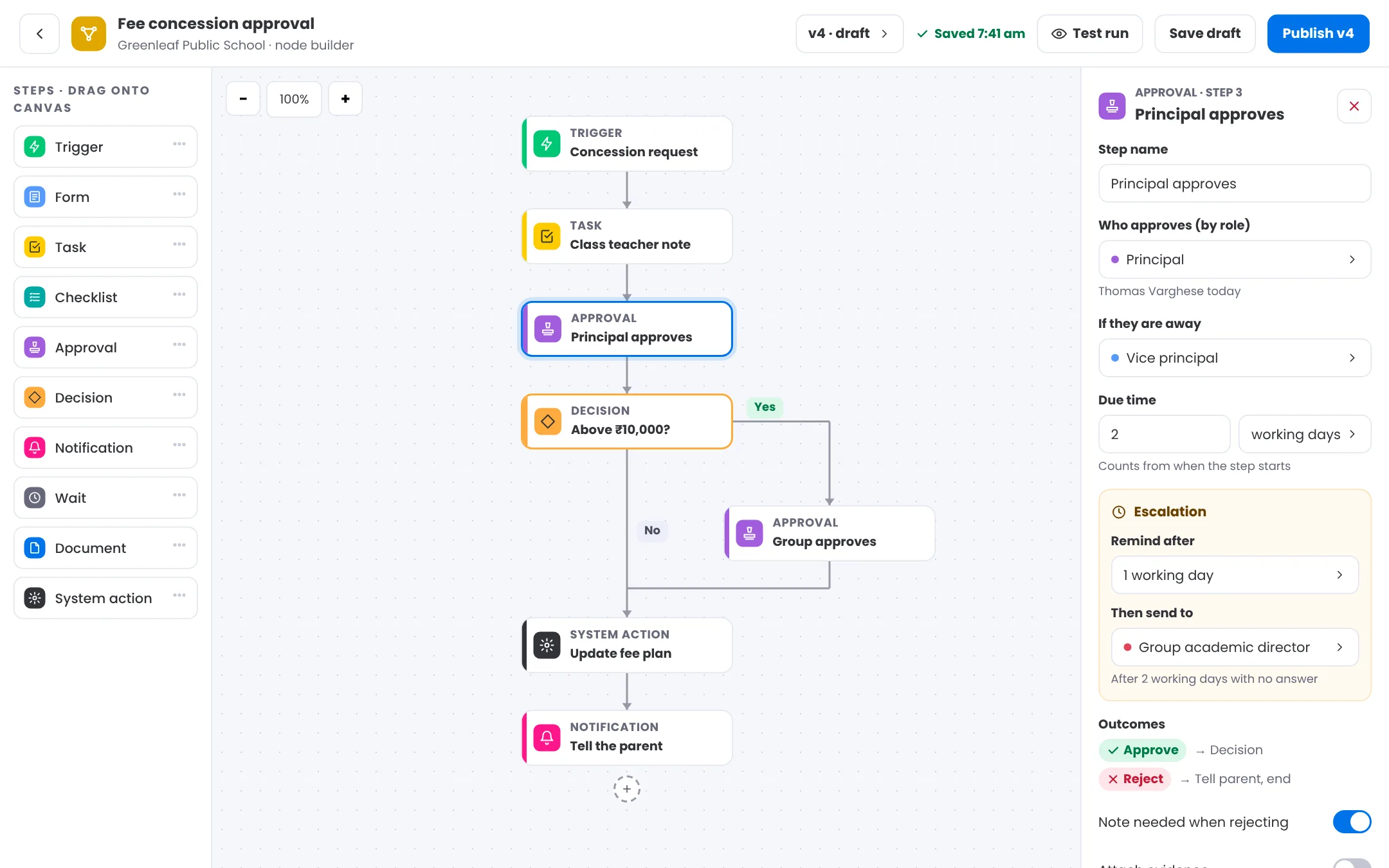
Treat it as a procedure, not a favour: a request, an approval and a new due date that the system remembers. That is a fee concession or instalment SOP, and it protects both the family and the office.
What to measure
Track three numbers each term: dues on the due date, dues 30 days later and how many families needed a call. If the third number falls, the schedule is working.